
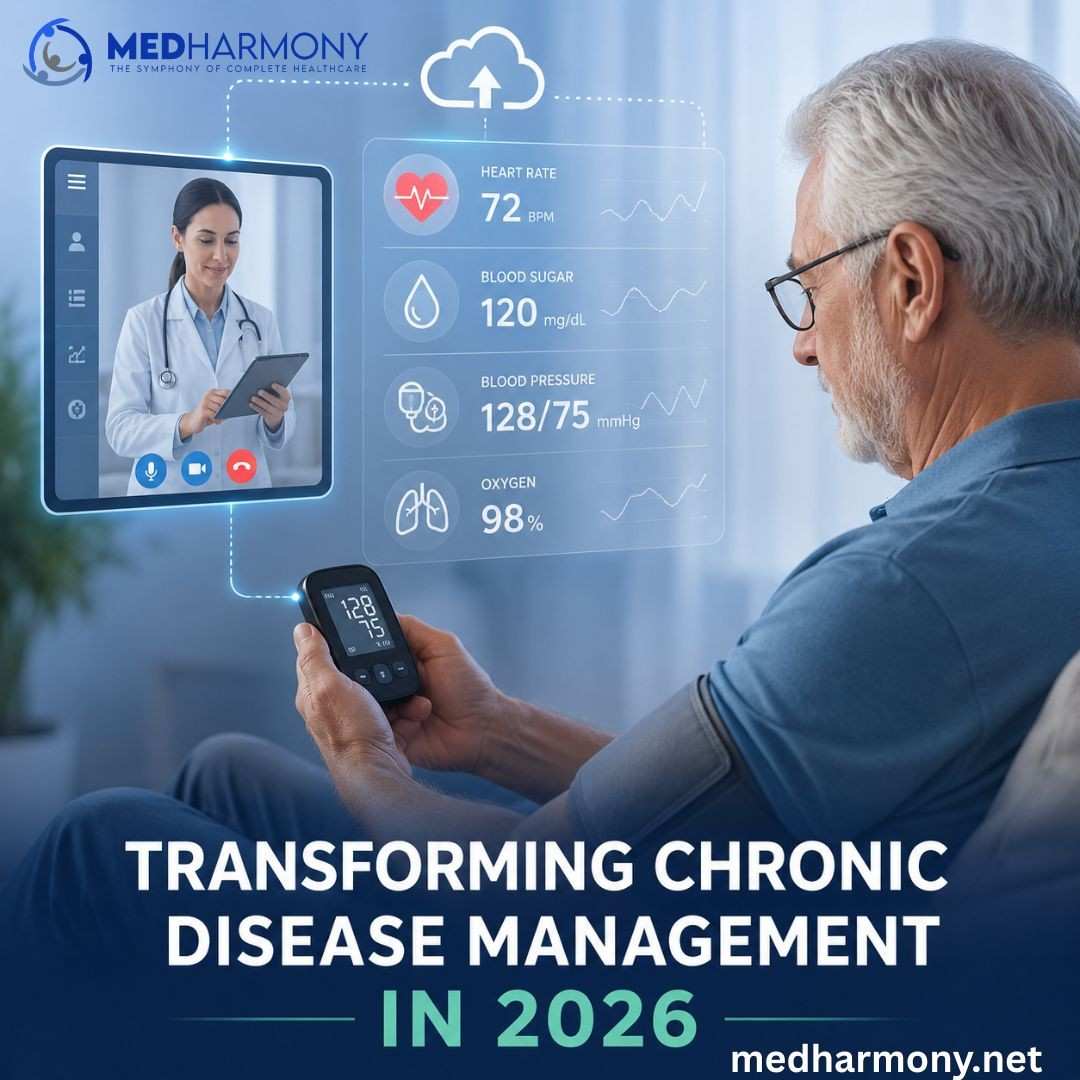
Healthcare in 2026 is no longer limited to hospitals and clinics. With the rise of remote patient monitoring services, providers can now track patient health in real time, even when patients are at home. This shift is changing how chronic diseases are managed, making care more proactive, personalized, and efficient. Chronic conditions like diabetes, heart disease, and hypertension require ongoing attention. Traditional care models often fall short because they depend on occasional visits. This blog will explore all of that.
What is Remote Patient Monitoring?
Many providers and patients still ask, “What is RPM in healthcare?” In simple terms, it refers to using connected devices and digital tools to collect patient health data outside clinical settings. This data is then shared with healthcare providers, allowing them to make timely decisions.
Here are the key components of RPM –
- Connected health devices: Devices such as blood pressure monitors and glucose meters collect real-time data. These tools help providers stay informed without requiring in-person visits.
- Secure data sharing systems: Patient data is transmitted safely to care teams. This ensures privacy while enabling continuous monitoring.
- Clinical alerts and notifications: Providers receive alerts when readings go outside normal ranges. This allows for faster interventions and better outcomes.
- Patient engagement tools: Mobile apps and digital platforms encourage patients to stay involved. This improves adherence to treatment plans.
Why Chronic Disease Management Needs Change
Chronic diseases are long-term and often complex. Managing them requires more than occasional check-ups. Here are the main challenges in traditional care.
- Limited patient visibility: Doctors only see snapshots of patient health during visits. Important changes between visits often go unnoticed.
- Delayed interventions: Without continuous monitoring, problems may worsen before being detected. This leads to higher hospital admissions.
- Low patient engagement: Patients may forget medications or ignore symptoms. Lack of regular follow-up reduces accountability.
- High Healthcare costs: Emergency visits and hospital stays increase overall expenses. These costs impact both patients and providers.
How Remote Patient Monitoring is Transforming Care
The impact of remote patient monitoring services in 2026 is significant. It enables a shift from reactive to proactive healthcare.
1. Continuous Health Tracking
- Patients are monitored daily instead of occasionally.
- Providers can track trends over time.
- Small changes are detected before they become serious issues.
2. Early Detection of Complications
Alerts notify providers of abnormal readings.
Early action reduces the risk of severe complications.
Patients receive timely care without delays.
3. Improved Patient Engagement
- Digital tools encourage regular participation.
- Patients become more aware of their health.
- This leads to better adherence and lifestyle changes.
4. Personalized Treatment Plans
- Data-driven insights allow customized care.
- Providers adjust treatments based on real-time data.
- Each patient receives care tailored to their condition.
Clinical Benefits for Chronic Conditions
The role of remote patient monitoring services in managing chronic diseases continues to grow. Here are the key clinical advantages.
- Better disease control: Patients with diabetes or hypertension see improved stability. Continuous tracking supports consistent management.
- Reduced hospital visits: Early intervention lowers emergency room visits. Hospital readmissions decrease significantly.
- Improved treatment adherence: Regular monitoring keeps patients accountable. Providers can quickly address missed medications.
- Holistic health monitoring: Both physical and behavioral health are tracked. This ensures comprehensive care delivery.
Enhancing Health and Wellness Services
Modern healthcare is becoming more patient-centered. Health and wellness medical services now focus on prevention as much as treatment. Here is how RPM supports wellness.
- Preventive care approach: Early warnings help avoid serious health events. Patients stay healthier for longer periods.
- Lifestyle improvement support: Patients receive guidance on diet, exercise, and habits. This improves overall well-being.
- Better communication: Patients stay connected with care teams.
This builds trust and improves satisfaction.
The Role of Technology in RPM
Technology is the backbone of . It enables seamless data collection and analysis. Here are the main technological features:
- Smart monitoring devices: Devices are easy to use and provide accurate readings. Patients can operate them without technical knowledge.
- Data integration systems: Information flows directly into health records.Providers access insights in one place.
- Analytics and reporting tools: Data is transformed into actionable insights. This supports informed decision-making.
- Secure platforms: Patient privacy is maintained through encryption. Compliance with regulations is ensured.
Supporting High-Risk Patients
Patients with multiple conditions need consistent care. Remote patient monitoring services make this possible. Here are the key benefits for high-risk groups:
- Continuous care between visits: Patients receive ongoing support, not just during appointments. This reduces health risks.
- Coordinated care planning: Providers collaborate more effectively.Care becomes more structured and efficient.
- Medication management: Monitoring ensures patients follow prescribed treatments. Adjustments can be made quickly.
- Early intervention strategies: Health issues are addressed before escalation. This improves long-term outcomes.
Implementation and Future Outlook
Adopting remote patient monitoring services requires a structured approach. Healthcare providers must integrate technology with workflows. Here are the steps for successful implementation.
- Assessment of patient needs: Identify which patients benefit most from monitoring. Focus on chronic and high-risk cases.
- Training for clinical teams: Staff must understand how to use RPM tools. This ensures smooth adoption.
- Workflow integration: Monitoring data should fit into daily operations. This improves efficiency.
- Continuous performance tracking: Providers measure outcomes and refine strategies. This ensures long-term success.
Real-World Impact of RPM
These measurable improvements highlight why RPM is becoming a key part of modern care delivery.
1. Fewer hospital readmissions: Continuous monitoring allows providers to detect early warning signs before a condition worsens. Instead of waiting for symptoms to escalate, care teams can intervene quickly through medication adjustments or timely consultations.
2. Lower emergency service use: With real-time alerts and ongoing tracking, potential health risks are identified early. Patients receive guidance and care before issues turn into emergencies.
3. Higher patient satisfaction: Patients feel more connected to their providers through regular monitoring and communication. Knowing that someone is actively tracking their health builds trust and confidence.
4. Improved clinical indicators: Consistent monitoring leads to better control of key health metrics such as blood pressure, glucose levels, and heart rate. Providers can track trends over time and make data-driven adjustments to treatment plans.
The Bottom Line
Chronic disease management is undergoing a major transformation in 2026. With the help of remote patient monitoring services, healthcare providers can deliver continuous, personalized, and proactive care. By combining technology with clinical expertise, RPM improves outcomes, reduces costs, and enhances patient experiences.
If you’re looking to improve patient outcomes while streamlining care delivery, MedHarmony offers a complete solution tailored to your needs. Partner with us to bring smarter, more connected healthcare to your patients.
Frequently Asked Questions:
1. What is remote patient monitoring?
Remote patient monitoring involves using digital devices to track patient health outside clinical settings and share data with providers.
2. What is RPM in healthcare?
It refers to technology-enabled monitoring that allows providers to track and manage patient health remotely.
3. How does RPM help chronic disease management?
It enables continuous tracking, early detection of issues, and personalized treatment, improving overall outcomes.
4. Are remote patient monitoring services cost-effective?
Yes, these services reduce hospital visits and improve efficiency. This leads to lower healthcare costs.
5. How do health and wellness services benefit from RPM?
By integrating RPM, health and wellness medical services can focus more on prevention, patient engagement, and long-term health improvement.
